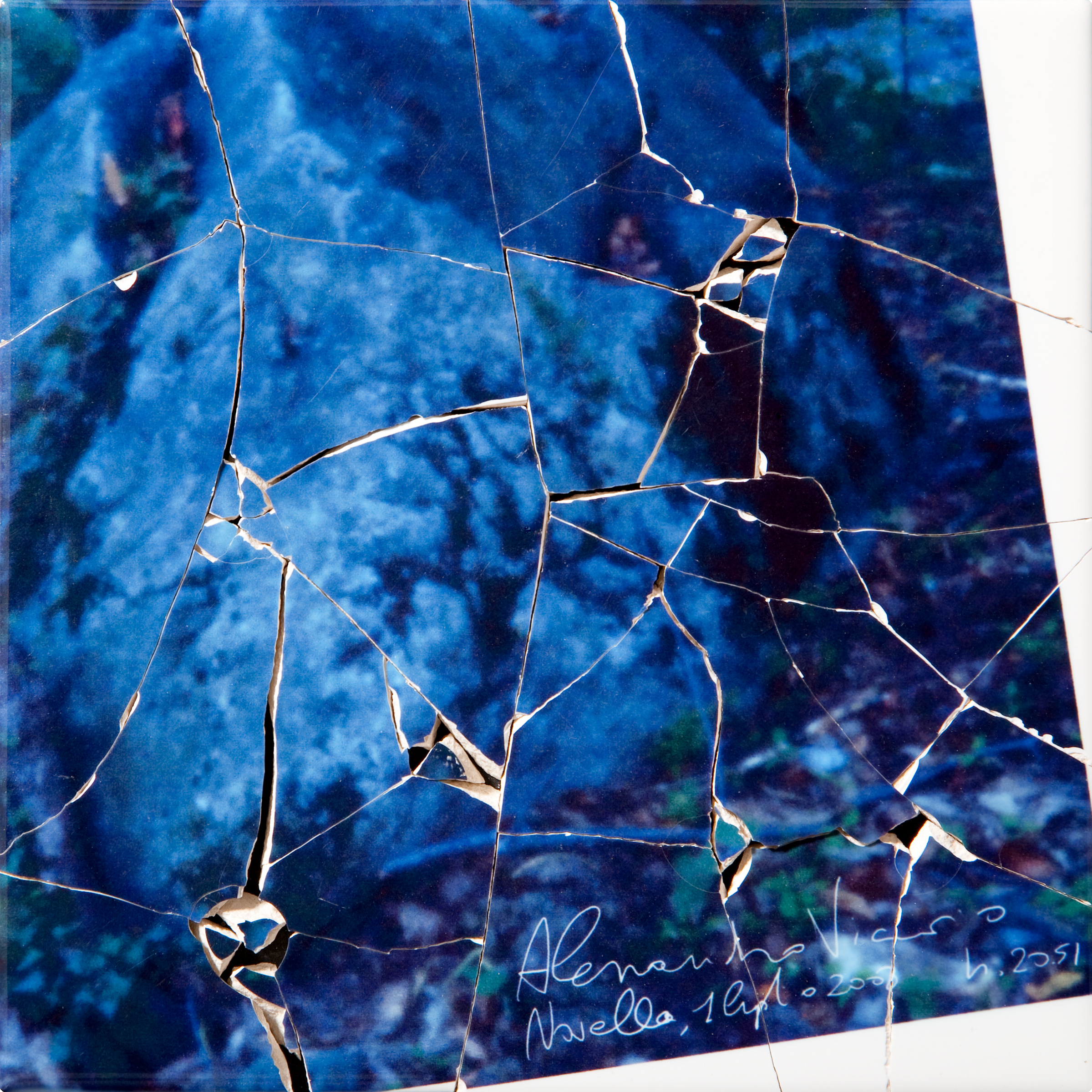
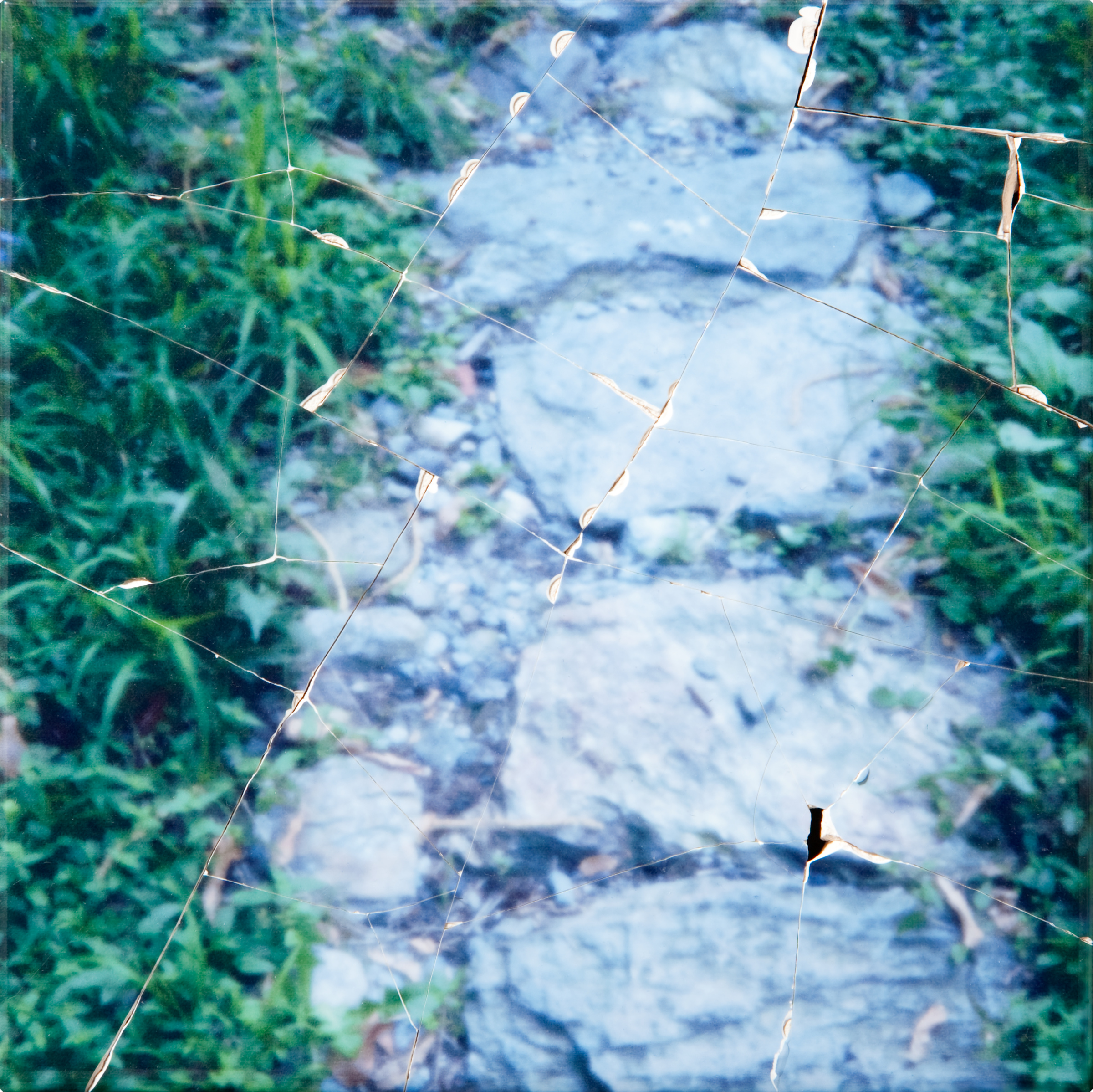
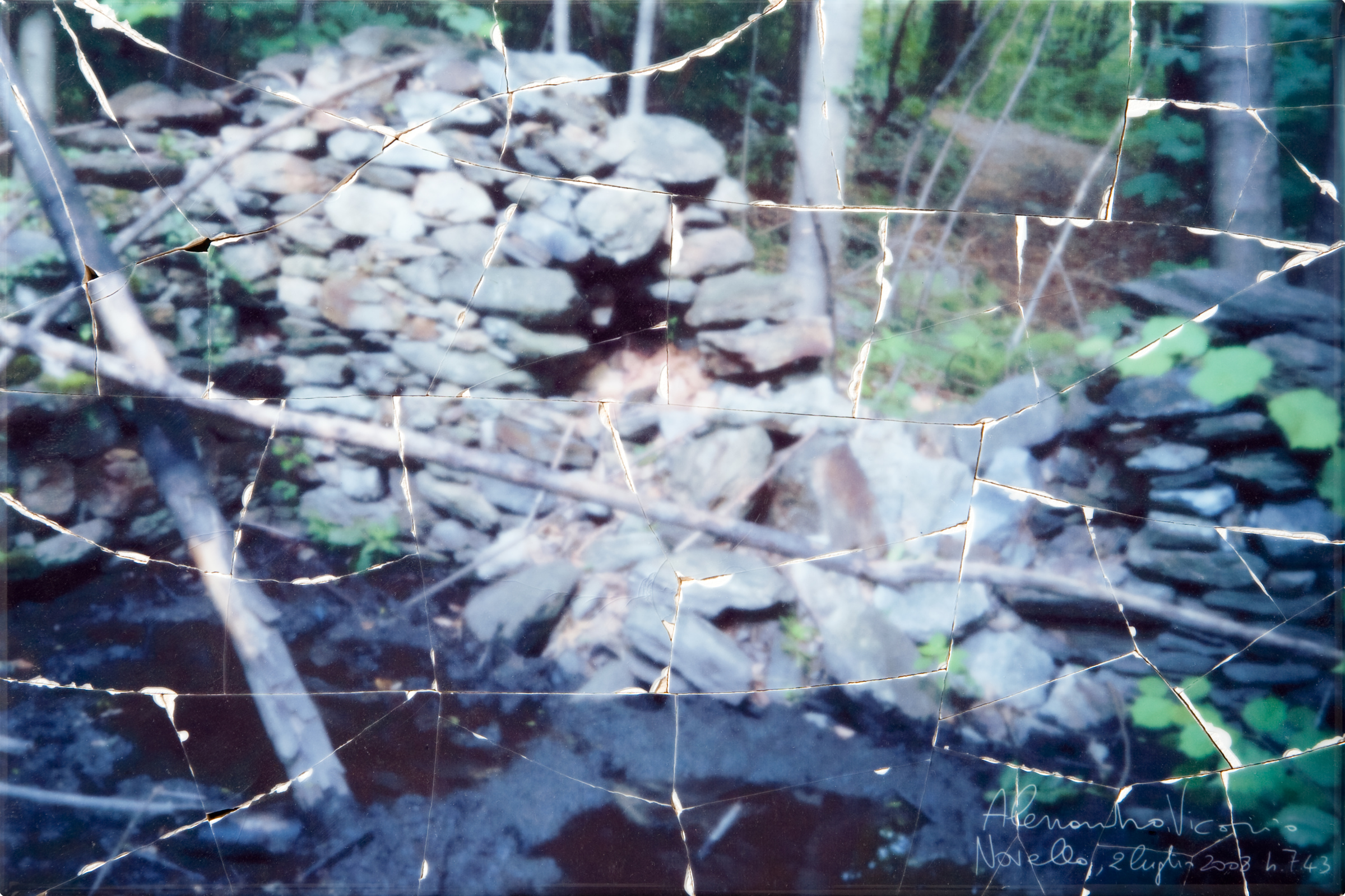
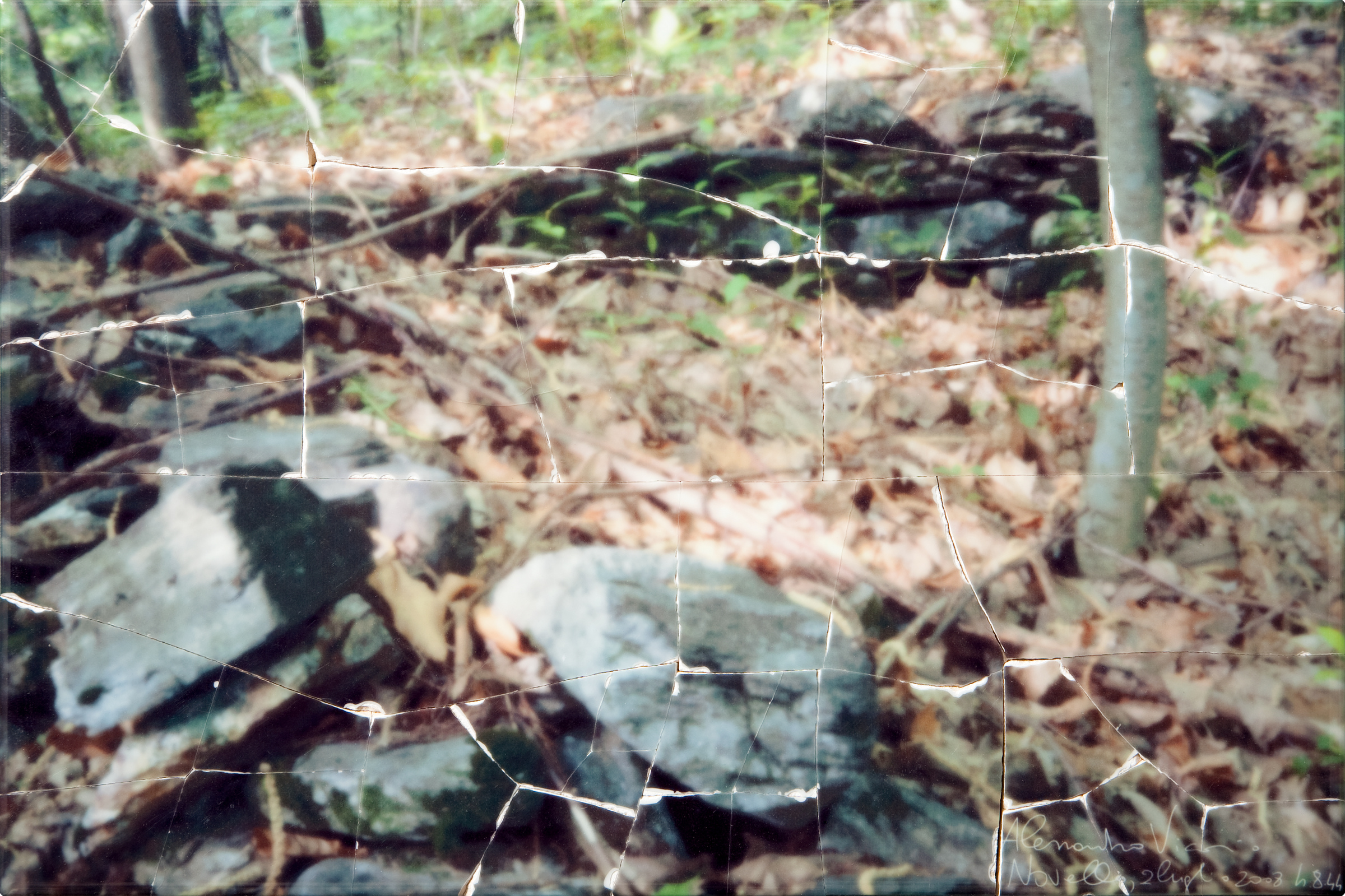
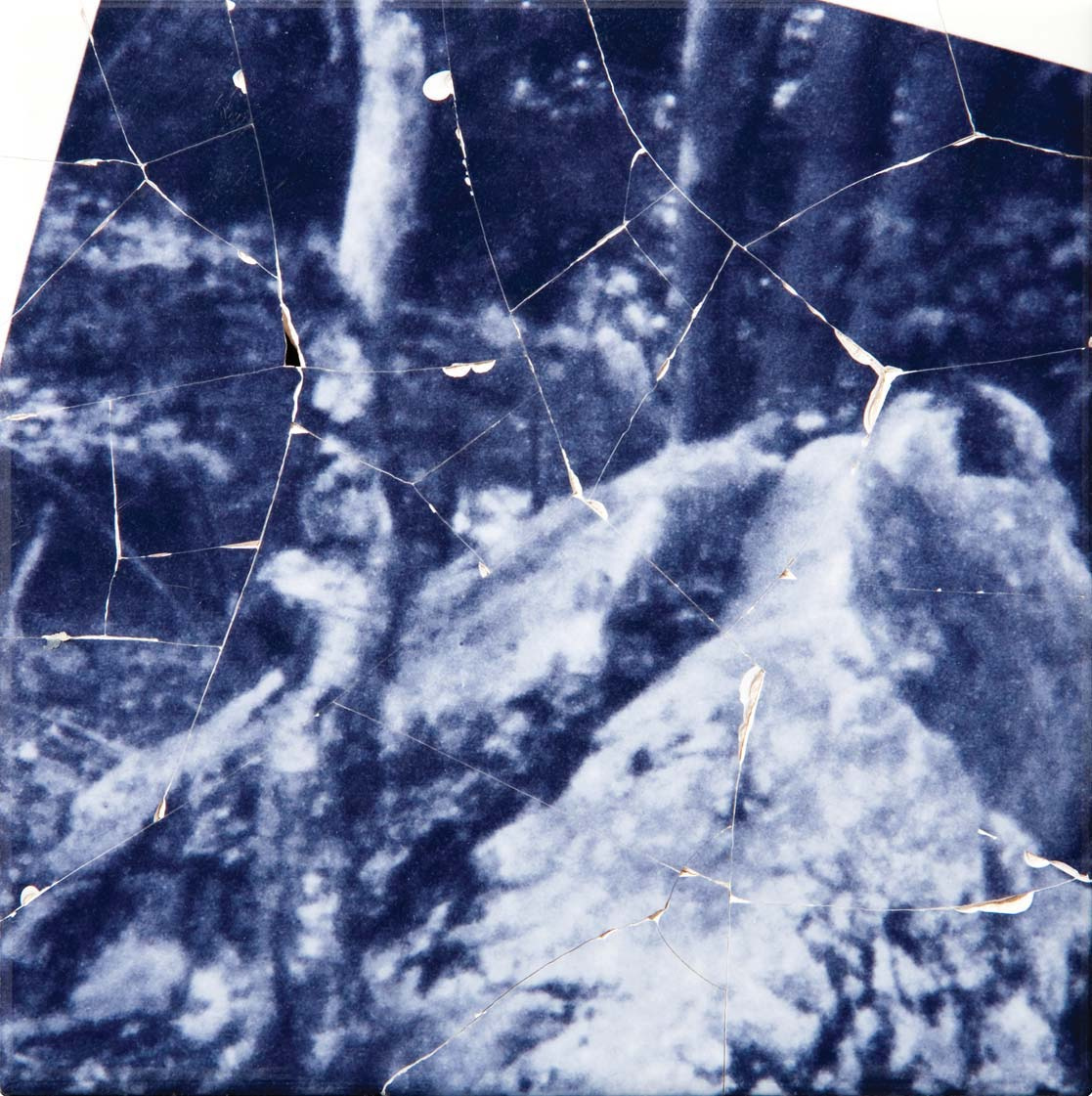
Ove dicesi a Novella, sopra la montagna presso ArcegnoAt the place called Novella, on the mountain near Arcegno

2008

Commissioned by: Municipality of Losone, Arcegno, Canton Ticino, Switzerland

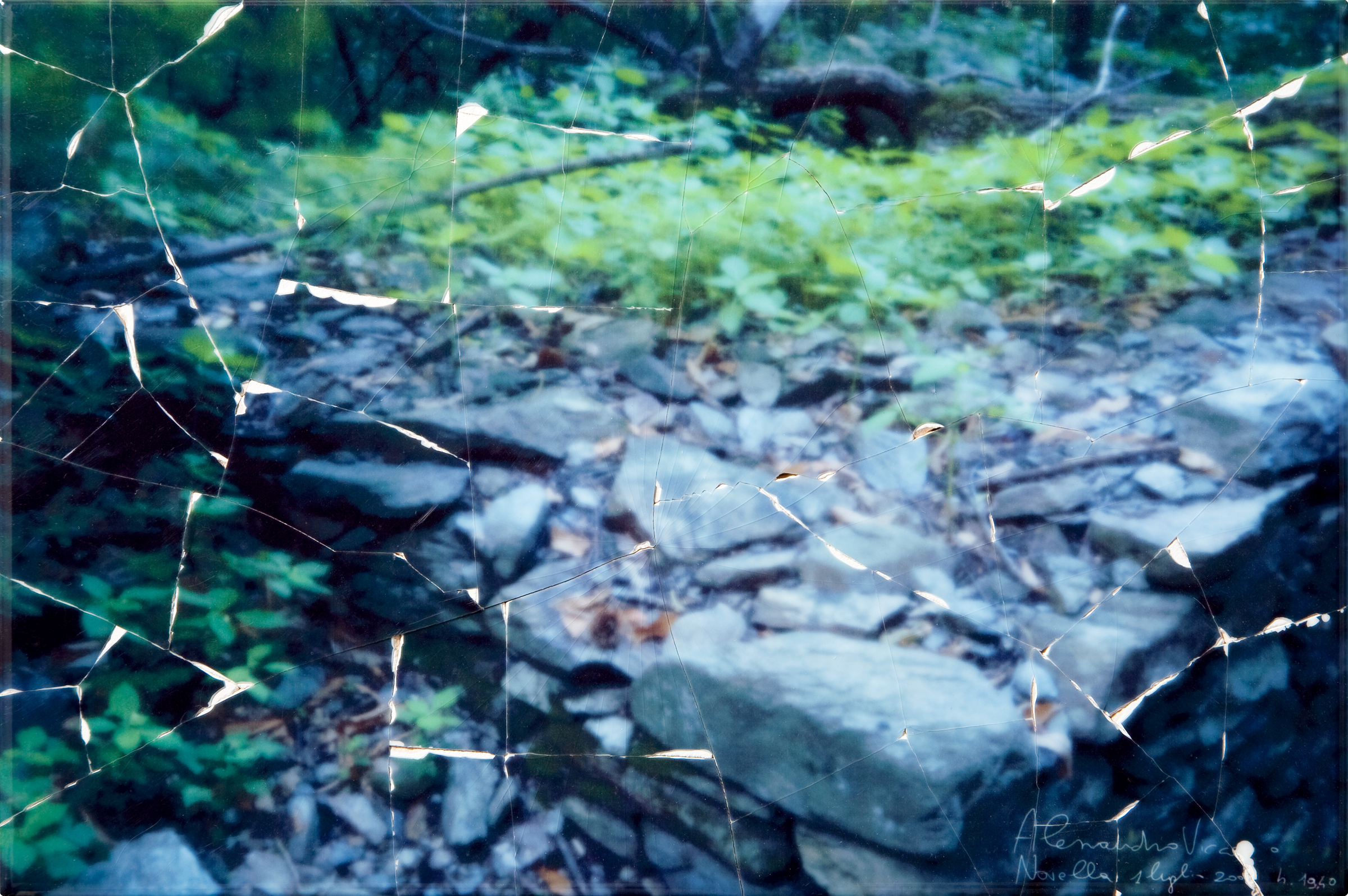
Ruins of houses used during a plague epidemic in Canton Ticino are photographed with a digital pinhole camera. Printed on ceramic tiles, the images are broken, reassembled and photographed again. The resulting photographs connect the fragility of these remnants with that of representation itself.

Senza titolo / Untitled, 2008 · photographic reproduction, 2009 · Arcegno, Canton Ticino, Switzerland
Senza titolo / Untitled, 2008 · photographic reproduction, 2009 · Arcegno, Canton Ticino, Switzerland · from the series Ove dicesi a Novella, sopra la montagna presso Arcegno / At the place called Novella, on the mountain near Arcegno (2008)

Texts

Diego Mormorio

Death Inscribed on the Stones of Photography

La morte scritta sulle pietre della fotografia

Back to Selected Commissions

Photograph

La morte scritta sulle pietre della fotografia

di Diego Mormorio

Italiano

 Per quanto possa apparire a prima vista incredibile, le grandi cose stanno dentro le piccole. O meglio, quelle che spesso vengono considerate “piccole cose” appaiono tali perché misurate con un metro inadeguato. Prendiamo la peste e le pulci. Sono due realtà a prima vista immensamente lontane. La prima parola – peste – fa ancora terrore: così quando comparve il virus dell’Aids, molti lo chiamarono «la peste del ventunesimo secolo». È qualcosa di immensamente spaventevole. “Pulce”, invece, è una parola che indica un piccolissimo animale ed evoca un certo fastidio, o, per la precisione, un po’ di prurito. Insomma, le pulci non fanno molta paura. Solo ogni tanto si presentano in qualche scuola. Ma vengono subitamente scacciate. In realtà, per lunghi secoli, le pulci e la peste hanno vissuto insieme. O meglio, insieme hanno prodotto la morte di milioni di persone. L’idea che le piccole cose contengono le grandi, prima di definirsi chiaramente attraverso lo studio delle dottrine orientali, cominciò in me a farsi strada nel 1988, proprio attraverso le pulci e la peste: più precisamente con un piccolo libro di Giovanni Berlinguer che toccava questo argomento, Le mie pulci. Sicché ora, ogni volta che sento parlare di pulci o di peste, mi viene da sorridere, così come si fa quasi sempre davanti a un bel ricordo, che in questo caso, naturalmente, non riguarda soltanto il libro appena detto, ma soprattutto l’insegnamento di alcuni maestri, che mi hanno portato a convincermi che per ogni cosa bisogna usare un metro diverso: un metro che si confà alla cosa. Il metro della comprensione profonda della realtà fenomenica è, infatti, un elastico. Il metro della scienza che guarisce dalla peste o che debella le pulci è diverso da quello che fa capire che tutte le cose vivono una dentro l’altra, indipendentemente dalla loro misura fisica. La fotografia può riguardare tutt’e due questi metri. Può essere uno strumento della scienza, così come può essere un tratto del metro che misura le cose in profondità, come sono queste immagini di Alessandro Vicario sulla memoria della peste che attraversò l’Europa nel Cinquecento. Esse nascono da un piccolo gruppo di case fra i boschi di Arcegno, in una località chiamata Novella, dove sembra che i “sani” abbiano rinchiuso i malati. Nelle fotografie di Vicario la peste ha smesso di essere tout court la peste ed è diventata tante cose che apparentemente non hanno niente in comune con essa. E, proprio per questo, esse sono la prova che ogni cosa vive dentro altre cose. Che l’immagine della fotografia non è immediatamente la cosa rappresentata. Addirittura nelle fotografie di Vicario la memoria della peste nei boschi di Arcegno diventa ceramica – frantumi di ceramiche intrise di immagini sottoposte alla violenza del tempo. Fotoceramiche, come quelle che popolano le lapidi dei nostri cimiteri e sulle quali è possibile leggere un’antropologia di sguardi. Per vie traverse, la peste torna a essere la peste. La morte scritta sulle pietre, sulle carte della storia, nel fondo dei cuori. 

2010

Death Inscribed on the Stones of Photography

by Diego Mormorio

However incredible it may seem at first, great things are contained within small ones. Or rather, what are often considered “small things” seem so because they are measured with an inadequate yardstick. Take the plague and fleas. At first sight, they appear to belong to immensely distant realities. The first word — plague — still inspires terror: when the AIDS virus appeared, many called it “the plague of the twenty-first century”. It is something immensely frightening. “Flea”, by contrast, is a word that denotes a very small animal and suggests a certain irritation, or, more precisely, a little itching. In short, fleas are not very frightening. They turn up in a school only now and then. But they are promptly driven out. In reality, for many centuries, fleas and the plague lived together. Or rather, together they caused the deaths of millions of people.

Before becoming clear to me through the study of Eastern teachings, the idea that small things contain great ones began to take shape in my mind in 1988, through fleas and the plague: more precisely, through a little book by Giovanni Berlinguer that touched on this subject, Le mie pulci. So now, whenever I hear people speak of fleas or the plague, I find myself smiling, as one almost always does at a happy memory. In this case, of course, the memory concerns not only that book, but above all the teachings of certain masters, who led me to believe that each thing requires a different measure: one suited to the thing itself. The measure that allows a profound understanding of phenomenal reality is, in fact, an elastic one.

The measure used by the science that cures the plague or eradicates fleas is different from the one that enables us to understand that all things live within one another, regardless of their physical size. Photography can concern itself with both these measures. It can be an instrument of science, just as it can form part of the measure that probes the depths of things, as do these images by Alessandro Vicario of the memory of the plague that swept through Europe in the sixteenth century. They originate in a small group of houses in the woods of Arcegno, in a place called Novella, where it seems that the “healthy” confined the sick.

In Vicario’s photographs, the plague has ceased to be simply the plague and has become many things that apparently have nothing in common with it. And precisely for this reason, these photographs are proof that every thing lives within other things. That the photographic image is not immediately the thing represented.

In Vicario’s photographs, the memory of the plague in the woods of Arcegno even becomes ceramic — fragments of ceramics imbued with images subjected to the violence of time. Photoceramics, like those that populate the gravestones in our cemeteries and in which an anthropology of gazes can be read. By indirect paths, the plague becomes the plague once more. Death inscribed on stones, on the documents of history, in the depths of hearts.

2010

Ricomposizioni stenopeiche 

di Antonio Ria

Italiano

Come è nata l’idea di questa ricerca, all’apparenza così distante dall’attualità? «Il lavoro mi fu commissionato l’anno scorso dal Comune di Losone – in Canton Ticino – per una mostra collettiva sul tema della peste. Certo, l’epidemia di peste che colpì il Nord Italia e il Ticino nel Cinquecento è un tema lontano dall’attualità. Molto lontano, e non solo all’apparenza. È però legato – storicamente – proprio allo spazio espositivo che ha ospitato per primo questa mostra. Si tratta del Bluvanoni Spazio per l’Arte Contemporanea, che ha sede nella Chiesa di San Rocco, a Losone. San Rocco è il santo protettore degli appestati. Un lavoro site specific, dunque, in origine. Il soggetto sono certi ruderi di case, poco distanti dalla Chiesa di San Rocco, che probabilmente furono adoperate per ricoverare gli appestati losonesi, separandoli dai sani, durante l’epidemia dal 1584-85. C’era anche uno spunto letterario. Una fonte storica, per l’esattezza: la trascrizione di un breve manoscritto del 1912 nel quale uno storico locale – Siro Borrani – menziona le costruzioni presso Novella, nel bosco di Arcegno (questo il nome esatto della località). Anche il titolo del lavoro è una citazione tratta da questo documento, inserito in esergo in questo catalogo». Che cosa ti ha affascinato di questo tuo lavoro? «Il luogo delle riprese, innanzitutto. Un luogo evocativo e carico di memoria. I ruderi, abbastanza vicini tra loro, sono situati in un bosco fitto e ombroso. A incantarmi furono soprattutto i rumori del bosco: i fruscii dell’erba mossa dal vento, lo stormire delle fronde, il canto degli uccelli. Affascinante è stato anche il processo di ideazione e di produzione del progetto. Le idee, che mi hanno portato a sperimentare una forma espressiva per me nuova, si sono generate in maniera intuitiva. Mi ha appagato l’immediatezza con la quale sono arrivato al risultato finale». Puoi descrivere esattamente il procedimento tecnico del tuo lavoro? «Fin dall’inizio avevo ipotizzato di eseguire le riprese col foro stenopeico (anziché con l’obiettivo), registrando l’immagine non su pellicola o su carta fotografica, ma mediante un sensore digitale. Desideravo, in questa maniera, unire i due estremi tecnologici della fotografia: il foro stenopeico, appunto (che è il sistema di formazione dell’immagine più arcaico) e il sensore digitale (che è il dispositivo di registrazione dell’immagine più moderno e attuale)». Perché la scelta del foro stenopeico? Quali soddisfazioni ti ha dato? E in che modo questa scelta ha contribuito alla realizzazione del tuo progetto? «Intuivo in questa procedura una particolare coerenza rispetto al tema assegnatomi (e soprattutto rispetto al modo nel quale desideravo trattarlo). Così come il foro stenopeico e il sensore digitale coesistono (e possono essere utilizzati in combinazione) nella attuale tecnologia fotografica, allo stesso modo – nel mondo, e nella vita di tutti noi – coesistono passato e presente. Passato e presente non sono dimensioni distinte, ma dimensioni che dipendono l’una dall’altra. Il passato è parte del presente: il passato è il modello, elaborato nel presente, di cose e vicende trascorse. Ricostruite attraverso i segni, le tracce e gli indizi che ci sono pervenuti; e interpretate mediante le conoscenze e i mezzi scientifici e tecnologici di cui oggi disponiamo. La fotografia stenopeica manca della nitidezza che caratterizza le normali riprese fotografiche. A differenza dell’immagine formata da un obiettivo (con cui si può mettere a fuoco o sfocare), l’immagine prodotta dal foro stenopeico è uniformemente poco dettagliata. Il foro non permette né di mettere a fuoco né di sfocare. La profondità di campo è infinita. Il foro produce immagini vaghe, indistinte. È come se le cose, anziché essere analiticamente descritte, fossero solamente accennate. Ne deriva una rappresentazione che pare quasi trasognata. Da queste caratteristiche peculiari scaturisce il fascino di questa particolare forma di fotografia». È la prima volta che usi la fotografia stenopeica? «Questo è il primo lavoro. È un piccolo lavoro. Ma mi ha dato soddisfazione e mi incoraggia a continuare la ricerca intrapresa (al di là del tema specifico, ovviamente). In realtà, però, conosco la fotografia stenopeica fin da quando ero ragazzo. Ricordo ancora le mie prime esperienze stenopeiche. Erano gli anni della scuola dell’obbligo. Come sai, ho cominciato a praticare la fotografia fin da ragazzo, guidato da mio padre, fotografo. Con il suo aiuto avevo costruito un apparecchio stenopeico con una scatola da scarpe (il foro l’avevo fatto semplicemente bucando con un ago un pezzo di carta stagnola – come fanno tutti) e d’estate mi divertivo a fotografare gli amici e semplici scorci del paese nel quale trascorrevo le lunghe vacanze estive (nelle Marche). Chissà dove sono finite quelle antiche immagini. Prima o poi le cercherò. Mi piacerebbe rivederle». Come hai proceduto concretamente nella realizzazione del progetto? «Nella scelta della luce e delle inquadrature, al solito, mi sono affidato all’istinto, all’intuizione. Ho lasciato che fosse il luogo (la sua atmosfera, i suoi colori, la sua luce) a suggerirmi che cosa fare. Ho trascorso nel bosco di Novella un pomeriggio, fino all’imbrunire; e poi vi sono tornato il giorno appresso, di primissimo mattino, e vi sono rimasto fino all’ora di pranzo. Ho preso una ventina di fotografie (varianti a parte), tra le quali avrei poi scelte quelle per la mostra. Ma ancora non sapevo in che modo avrei presentato il lavoro». Come sei arrivato al lavoro definitivo? «Ho scelto sei immagini e le ho stampate su piastrelle di ceramica (un supporto tra i più durevoli, ma nello stesso tempo anche fragile). Le ho frantumate; non ad arte, ma affidandomi al caso (o quasi), prendendole a martellate. Ai visitatori della prima mostra proposi i frantumi di queste piastrelle, invitandoli a trattarli come uno storico o un archeologo tratterebbe delle fonti giunte a lui rovinate e frammentate. Li invitavo, cioè, a ricomporle, facendo così ricomparire le immagini. Infine, terminata quella mostra collettiva, procedetti alle riproduzioni delle piastrelle ricomposte e le stampai nelle stesse dimensioni. Queste riproduzioni (fotografie di fotografie) sono per me l’opera finale, che ora propongo al pubblico». Perché hai stampato le foto su piastrelle di ceramica? «Non so esattamente come e perché (e non ricordo neppure quando) ho concepito l’idea di trasformare le immagini (testimonianza personale, parziale, arbitraria, delle tracce del passato) in qualcosa che avesse una maggiore consistenza fisica rispetto alle consuete stampe fotografiche. Volevo che le immagini stesse fossero (o apparissero) dei reperti fisici. Desideravo enfatizzare – rendendola manifesta (e addirittura tangibile) – l’idea che non solo i resti materiali del passato, ma anche le loro testimonianze (le fonti secondarie) sono fragili, alterabili: soggette insomma alle vicende umane, alle manomissioni, e al caso». Ho voluto che fosse Alessandro Vicario a spiegare la sua ricerca e ho voluto che invece di darmi delle indicazioni di poetica, mi dicesse concretamente, operativamente come è arrivato a questo lavoro, nel progetto, nel procedimento e nel risultato finale, che si può vedere in questo catalogo e in mostra. Dico sinceramente che le poche, essenziali immagini che qui si propongono mi intrigano davvero: mi affascinano e mi incuriosiscono nello stesso tempo. Anche se sono molto diverse dagli altri lavori di Alessandro, che negli anni ho seguito nella loro genesi e realizzazione, spesso accompagnandoli fino alla messa in pagina in catalogo o sulle pareti di gallerie e vari spazi espositivi. Queste immagini sono diverse, più lontane dalla mia esperienza fotografica e critica: forse proprio per questo mi attirano. Innanzitutto per l’esperienza della fotografia stenopeica, che – all’apparenza – si presenta come elementare, quasi banale. Ricordo, la diffusione che ne fece Ando Gilardi, soprattutto a livello didattico, a partire dagli anni Ottanta. Ma Vicario le fa fare un passo avanti, come lui stesso ha rivelato: cioè utilizza una tecnica di ripresa elementare, semplice, ma abbinandola a un sensore digitale. Quasi due opposti che Alessandro riesce a coniugare, a congiungere, con risultati, appunto, intriganti. E sorprendenti. Qual è il rapporto fra queste immagini e il tema di partenza, la peste? Nessuno di noi ha esperienza di contatto con un malato di peste. Ma a me vengono in mente i lebbrosi, i tanti lebbrosi che ho visto e aiutato a curare per alcuni mesi in un piccolo ospedale in piena foresta, in Camerun, molti anni fa. Ma il ricordo è ancora nitido, proprio perché li ho anche fotografati. Non credo che Alessandro abbia avuto questa esperienza, che ti lascia un segno per la vita. Ecco, queste sue immagini in qualche modo ricordano le ferite inflitte dalla malattia a quei corpi. “Strappi” che non si rimarginano; cicatrici di “lesioni” che restano per sempre, anche quando si sopravvive. Suggestioni. Ciascuno poi leggerà in queste immagini quello che la sua esperienza lo porterà a leggere. Vi sono “strappi” e fratture, “lesioni” appunto, di ordine molto diverso: fisico e psichico. Il discorso si può allargare, dall’esperienza della peste nel Cinquecento, a temi e traumi e fratture e lesioni più vicine alla sensibilità odierna. Sollecitati da queste immagini, così profondamente immerse nel passato e nel presente. Immagini di memoria, ma che guardano, e ci fanno guardare all’oggi. La memoria infatti è uno dei temi fondanti della ricerca fotografica di Alessandro Vicario, fin dagli inizi: e basta sfogliare la sua bibliografia per verificarlo. Una memoria tuttavia che non rimane rinchiusa nel passato, ma che guarda al futuro. «Memoria è libertà?», si interrogava Lalla Romano nel suo ultimo libro Ritorno a Ponte Stura, pubblicato nel 2000, pochi mesi prima di morire, quasi a testamento della sua poetica. E rispondeva: «Deve esserlo. La memoria è sacra, ma non è un carcere. Amare la memoria è anche amare il futuro». E di Lalla Romano Alessandro Vicario (che ha letto i suoi libri e ha lavorato nella sua casa a Milano e nei suoi luoghi natali in Valle Stura) ha introiettato un’altra caratteristica fondamentale: quel «circondare di silenzio », di spazi bianchi, i suoi scritti, la sua scrittura. Spazi di pausa, di riflessione non solo per chi scrive, ma soprattutto per chi legge. E che lotta ha ingaggiato Alessandro per lasciare una pagina bianca accanto a ogni immagine: così vivono, non solo in se stesse, ma in chi le guarda e in quella pagina bianca “leggerà” o “scriverà” la sua “lettura dell’immagine”. E della sua vita, e della sua esperienza. Vite ed esperienze sempre più frantumate, quelle dell’uomo contemporaneo: le “leggiamo” nell’immagine a doppia pagina che apre questo catalogo. Frantumazione definitiva? Dispersione senza ritorno? Nella prima edizione di questa mostra Alessandro Vicario, ha invitato il visitatore a cercare di ricomporre le schegge delle sue fotografie su ceramica. Quindi, quello che ci vuole trasmettere, alla fine, è un messaggio positivo, di speranza. La ricomposizione è possibile: si può uscire dal cerchio della “peste”. La dispersione, di senso e di vita, non è definitiva nè ineluttabile. Certo, ci vuole pazienza. Ma anche coraggio. Una fotografia, quella di Alessandro Vicario, che parte dal passato, ma che si “spende” per il presente, con uno sguardo rivolto al futuro. Una fotografia fondata sulla memoria, ma aperta alla speranza. Nella sua caratterizzazione informale e quasi astratta, appare impegnata e ben radicata nella vita. Come giustamente scrive Diego Mormorio nelle pagine seguenti a commento delle immagini di Vicario, dalla «memoria della peste nei boschi di Arcegno» emerge una fotografia capace di utilizzare un metro «che misura le cose in profondità». 

Milano, mercoledì 16 Dicembre 2009.

Pinhole Recompositions

by Antonio Ria

How did the idea for this research arise, when it seems so far removed from the present?

“The work was commissioned last year by the Municipality of Losone, in Canton Ticino, for a group exhibition on the plague. Certainly, the epidemic that struck northern Italy and Ticino in the sixteenth century is a subject far removed from the present. Very far removed, and not merely in appearance. It is, however, historically connected to the very exhibition space that first hosted this show. This is Bluvanoni Spazio per l’Arte Contemporanea, housed in the Church of San Rocco in Losone. Saint Roch is the patron saint of plague sufferers. Originally, then, it was a site-specific work.

“The subject is a number of ruined houses, not far from the Church of San Rocco, that were probably used to shelter plague sufferers from Losone, separating them from the healthy during the epidemic of 1584–85. There was also a literary starting point. A historical source, to be precise: the transcription of a short manuscript from 1912 in which a local historian, Siro Borrani, mentions the buildings near Novella, in the woods of Arcegno — the exact name of the place. The title of the work is also a quotation from this document, included as an epigraph in this catalogue.”

What fascinated you about this work?

“First of all, the place where I took the photographs. An evocative place, full of memory. The ruins, fairly close to one another, stand in dense, shady woodland. What enchanted me above all were the sounds of the woods: the rustling of grass in the wind, the stirring of leaves, birdsong.

“The process of conceiving and producing the project was fascinating too. The ideas that led me to experiment with a form of expression new to me arose intuitively. I found satisfaction in the immediacy with which I reached the final result.”

Can you describe the technical process of your work precisely?

“From the outset, I had considered taking the photographs with a pinhole rather than a lens, recording the image not on film or photographic paper but with a digital sensor. In this way, I wanted to bring together the two technological extremes of photography: the pinhole, the most archaic image-forming system, and the digital sensor, the most modern and current device for recording an image.”

Why did you choose the pinhole? What satisfaction did it give you? And how did this choice contribute to the realisation of your project?

“I sensed a particular coherence between this process and the theme I had been given, and above all the way I wished to approach it. Just as the pinhole and the digital sensor coexist and can be combined in contemporary photographic technology, so past and present coexist in the world and in all our lives. Past and present are not separate dimensions, but dimensions that depend on each other. The past is part of the present: the past is a model, developed in the present, of things and events that have passed. Reconstructed through the signs, traces and clues that have reached us, and interpreted through the knowledge and the scientific and technological means we have today.

“Pinhole photography lacks the sharpness characteristic of conventional photographs. Unlike an image formed by a lens, which can be brought into or out of focus, the image produced by a pinhole is uniformly low in detail. A pinhole allows neither focusing nor defocusing. The depth of field is infinite. It produces vague, indistinct images. It is as though things were merely suggested rather than described analytically. The result is a representation that seems almost dreamlike. The appeal of this particular form of photography springs from these distinctive qualities.”

Is this the first time you have used pinhole photography?

“This is the first project. A small project. But it has given me satisfaction and encourages me to continue the research I have begun, beyond this specific subject, of course. In fact, though, I have known pinhole photography since I was a boy. I still remember my first pinhole experiments. I was still in compulsory education. As you know, I began practising photography as a boy, with my father, a photographer. With his help, I made a pinhole camera from a shoebox — I made the hole simply by piercing a piece of foil with a needle, as everyone does — and in summer I enjoyed photographing my friends and simple views of the village in the Marche where I spent the long summer holidays. Who knows where those old images have ended up? Sooner or later I will look for them. I would like to see them again.”

How did you go about making the project in practice?

“In choosing the light and the framing, I relied, as usual, on instinct, on intuition. I let the place — its atmosphere, its colours, its light — suggest what I should do. I spent an afternoon in the woods of Novella until dusk; then I returned very early the next morning and stayed until lunchtime. I took about twenty photographs, not counting variants, from which I would later choose those for the exhibition. But I did not yet know how I would present the work.”

How did you arrive at the finished work?

“I chose six images and printed them on ceramic tiles, one of the most durable supports, yet also a fragile one. I shattered them, not in a calculated way, but leaving it more or less to chance, by hitting them with a hammer. At the first exhibition I offered visitors the fragments of these tiles, inviting them to treat them as a historian or archaeologist would treat sources that had reached them damaged and fragmented. In other words, I invited them to put the pieces back together, making the images reappear.

“Finally, when that group exhibition was over, I photographed the reassembled tiles and printed the reproductions at the same size. These reproductions — photographs of photographs — are, for me, the final work that I now present to the public.”

Why did you print the photographs on ceramic tiles?

“I do not know exactly how or why, and I do not even remember when, I conceived the idea of turning the images — personal, partial, arbitrary testimony to traces of the past — into something with greater physical substance than ordinary photographic prints. I wanted the images themselves to be, or to appear to be, physical artefacts. I wished to emphasise, by making it manifest and even tangible, the idea that not only the material remains of the past but also the testimony to them, the secondary sources, are fragile and susceptible to alteration: subject, in short, to human events, to tampering, and to chance.”

I wanted Alessandro Vicario himself to explain his research, and rather than offering statements of poetics, I wanted him to tell me, in concrete, practical terms, how he arrived at this work: its conception, its process and the final result, which can be seen in this catalogue and in the exhibition.

I can say sincerely that the few, essential images presented here truly intrigue me: they fascinate me and arouse my curiosity at the same time. Even though they are very different from Alessandro’s other works, whose conception and development I have followed over the years, often accompanying them through to their placement on the catalogue page or on the walls of galleries and other exhibition spaces. These images are different, further removed from my own photographic and critical experience; perhaps that is precisely why they attract me.

First of all, there is the experience of pinhole photography, which appears, on the surface, elementary, almost banal. I remember how Ando Gilardi popularised it, especially in education, from the 1980s onwards. But Vicario takes it a step further, as he himself has explained: he uses a simple, elementary photographic technique, but combines it with a digital sensor. Almost two opposites that Alessandro manages to unite, to join, with results that are, indeed, intriguing. And surprising.

What is the relationship between these images and their original subject, the plague? None of us has experienced contact with a plague sufferer. But I think of people with leprosy, the many I saw and helped care for over several months in a small hospital deep in the forest in Cameroon, many years ago. The memory is still vivid, precisely because I also photographed them. I do not think Alessandro has had this experience, which leaves a mark for life. Yet, in some way, his images recall the wounds that disease inflicted on those bodies. “Tears” that do not heal; scars from “lesions” that remain for ever, even in those who survive. Suggestions. Each person will then read in these images what their experience leads them to read. There are “tears” and fractures, “lesions”, of very different kinds: physical and psychological. The discussion can expand from the experience of the plague in the sixteenth century to subjects, traumas, fractures and wounds closer to contemporary sensibilities, prompted by these images, so deeply immersed in past and present. Images of memory that nevertheless look, and make us look, towards today.

Memory has, in fact, been one of the founding themes of Alessandro Vicario’s photographic research from the beginning: one need only leaf through his bibliography to see this. Yet it is a memory that does not remain confined to the past, but looks towards the future. “Is memory freedom?” Lalla Romano asked herself in her final book, Ritorno a Ponte Stura, published in 2000, a few months before her death, almost as a testament to her poetics. And she answered: “It must be. Memory is sacred, but it is not a prison. To love memory is also to love the future.”

Alessandro Vicario, who has read Lalla Romano’s books and worked in her Milan home and in her native places in the Stura Valley, has absorbed another of her fundamental characteristics: that “surrounding with silence”, with white spaces, of her texts, her writing. Spaces for pause and reflection, not only for the writer but above all for the reader. And what a battle Alessandro fought to leave a blank page beside every image: in this way the images live, not only in themselves but in those who look at them, and who, on that blank page, will “read” or “write” their own “reading of the image”. And of their life, and of their experience.

The lives and experiences of contemporary people are increasingly fragmented: we “read” them in the double-page image that opens this catalogue. Irreversible fragmentation? Dispersal without return? In the first presentation of this exhibition, Alessandro Vicario invited visitors to try to reassemble the shards of his photographs on ceramic. Ultimately, then, what he wishes to convey is a positive message, one of hope. Reassembly is possible: one can break out of the circle of the “plague”. The dispersal of meaning and of life is neither final nor inevitable. Certainly, it takes patience. But also courage.

Alessandro Vicario’s photography starts from the past but commits itself to the present, with its gaze turned towards the future. Photography founded on memory, yet open to hope. In its informal, almost abstract character, it appears engaged and firmly rooted in life.

As Diego Mormorio rightly writes in the following pages, commenting on Vicario’s images, from the “memory of the plague in the woods of Arcegno” emerges a photography capable of using a measure “that probes the depths of things”.

Milan, Wednesday 16 December 2009
Search